Delta-EM provides services during the full lifecycle of a project, from initial conception to Operations and Maintenance support:
- Feasibility studies
- FEED studies
- Process design and technology evaluation
- Technical due diligence
- Basic and detailed engineering
- Fabrication supervision and inspections
- Procurement and expediting
- Erection and constructions supervision
- QAQC
- Commissioning
- Operations and maintenance support
The team consists of process, mechanical, structural and instrumentation engineers, CAD designers, project managers, QA/QC managers, inspectors and administration staff. Each person is highly qualified in their own field of expertise, and collectively the Delta-EM team ensures an excellent and timely execution of complete turn-key projects.
AI Supported Engineering
Delta-EM is an early adopter of AI and has been extensively testing and implementing in-house AI Pilots to assists our engineering teams during project development and execution.
Our AI-pilots
- Capture our experience and rules into a structured digital asset.
- Generate many design options early.
- Screen these design options intelligently before expensive process design and CFD modelling starts
- Use CFD, process simulations and modelling as a proofing tool, not as a search tool.
- Continuously learn from field data.
AI assisted engineering is enhancing and expediting our engineering capability whilst reducing risk exposure. AI is not replacing our engineers but is facilitating their access to the collective experience of the company and wider engineering fields, is increasing the efficiency of our engineering team and reduces the lead time to define the optimal solution.
In-house software
Delta-EM has developed a range of proprietary software tools to support our design and technology development:
Waste Management and Biomass Conversion
- Heat and Mass Balance Calculation Programmes
- Sludge Drying and Incineration Plants
- Flares, groundflares, combustors and thermal oxidisers for waste gases
- Waste incineration plants for waste gases and liquids
- Energy-from-Waste Plants (Pyrolisis/Gasification/Combustion/CHP) for waste gases, effluents and solid waste
- Air Pollution Control / Flue Gas Cleaning
- Equipment Calculation and Sizing tools
- Waste Flow Modelling Software
Optimization and Energy Efficiency of Industrial Thermal Processes
- Process Design and Simulation Programmes
- Gas, Fuel, Multi-fuel, Waste Gas/Effluent Burners
- Process Furnaces
- Heat Recovery Systems
- Static incinerators, Flares, Combustors, Thermal Oxidisers
- Rotary kiln incinerators, gasifiers and pyrolysers
- Fluidised bed incinerators and gasifiers
- Reciprocating grate incinerators and gasifiers
- Direct and indirect driers
- Evaporators
- Integrated exhaust gas and flue gas cleaning systems
- Equipment Design Programmes and Database
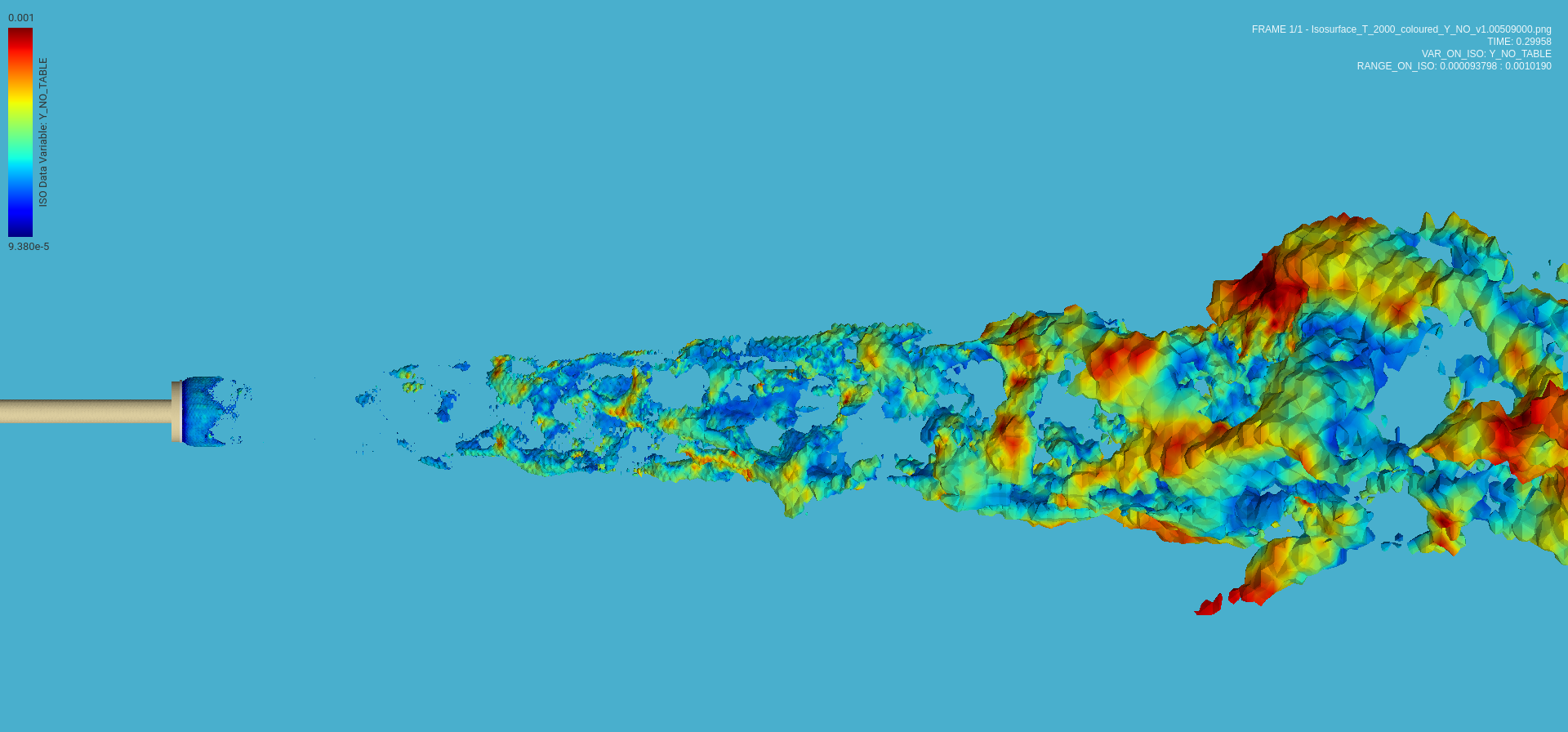
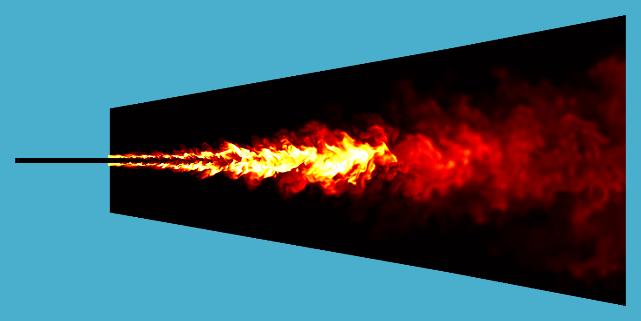
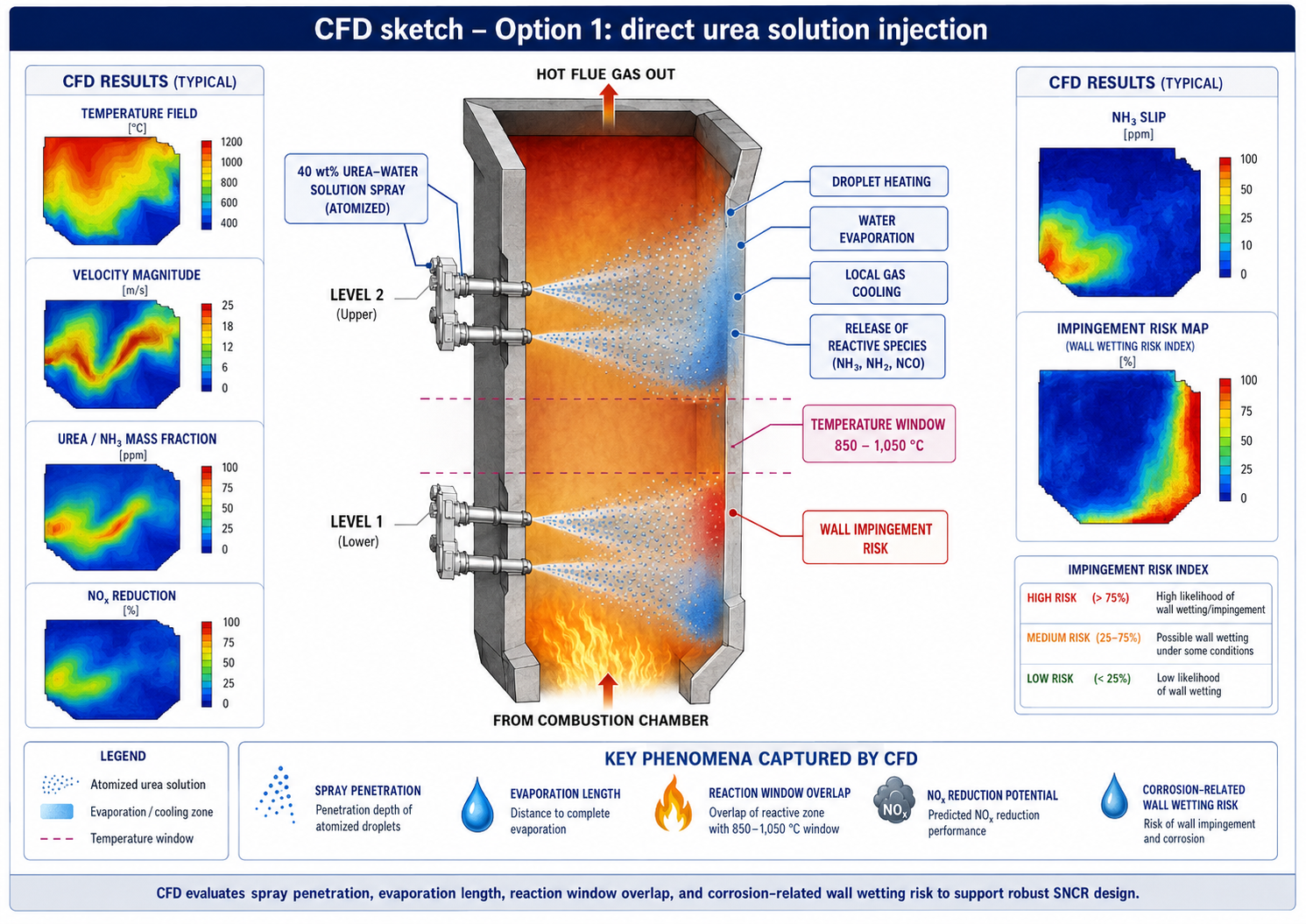
- Computational Fluid Dynamics Simulations Including Reaction Chemistry
Vapor Handling and Treatment in Tank Farms and Terminals
- Large database with physicochemical properties of chemicals including vapour tension, partial pressures, density, viscosity, LEL
- Calculation tool for LEL of vapour mixtures
- ATEX classification according to international norms
- Hazop check-list specific for operation of liquid and gas storage and transfer facilities
- Process simulation software for end-of-pipe vapour treatment solutions including scrubbers, ad/absorbers, condensers, flares, combustors, heat recovery boilers
- Equipment database and design software for safe transport of vapours including dynamic ans static flame arrestors, detonation arrestors, ATEX zone 0 fans
AI Supported CFD and Chemical Modelling
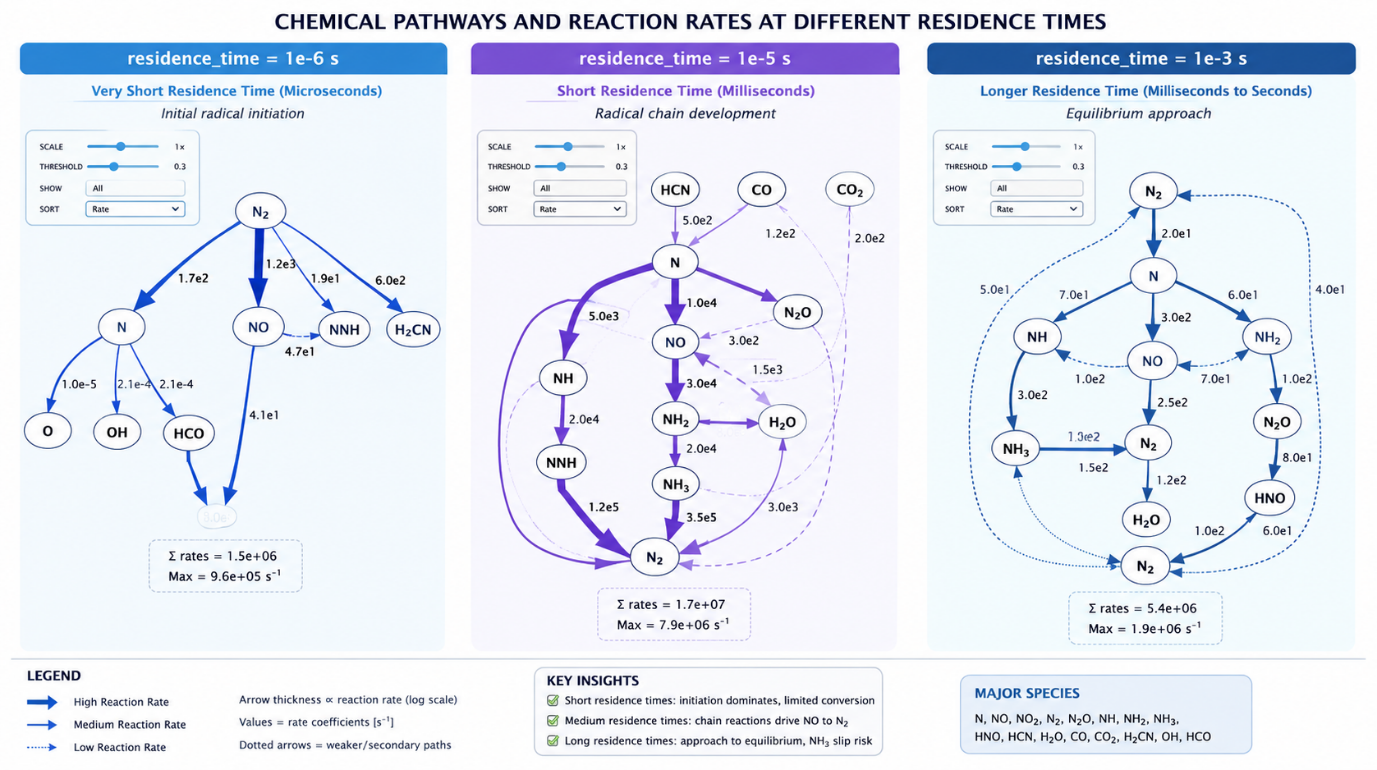
Delta-EM has developed an advanced CFD and chemical modelling capability that is fully supported by the latest developments in AI. The Delta-EM AI-enhanced modelling framework continuously learns from simulations, open-source external data and field data.
Instead of ad-hoc mechanisms and design concepts, we create:
- A governed chemistry-build system that incorporates the results of previous modelling efforts, real-world validation tests and permanent feedback from operating facilities
- Version-controlled and hashed mechanisms
- Automated validation tests during modelling:
- Element conservation.
- Equilibrium sanity checks.
- Ignition delay regression.
- Flame speed regression.
- NO sub-mechanism validation .
This approach yields considerable advantages
- Prevents hidden chemistry errors from propagating into CFD models.
- Ensures reproducibility in front of customers.
- Reduces or eliminates disputes regarding model validity.
- Makes the simulation environment editable.
- Reduces risk
- Better prediction of NOx formation zones.
- Controlled chemistry prevents modelling errors.
- Robustness against fuel variability.
- Faster development at lower cost
- Less re-tabulation.
- Fewer unnecessary CFD LES runs.
- Targeted injector optimization.
- Higher reliability
- Reproducible, validated chemical models.
- Structured simulation governance.
- Stronger technical justification in proposals.